The Hidden Playbook: What Sports Broadcasters Are Never Supposed to Say
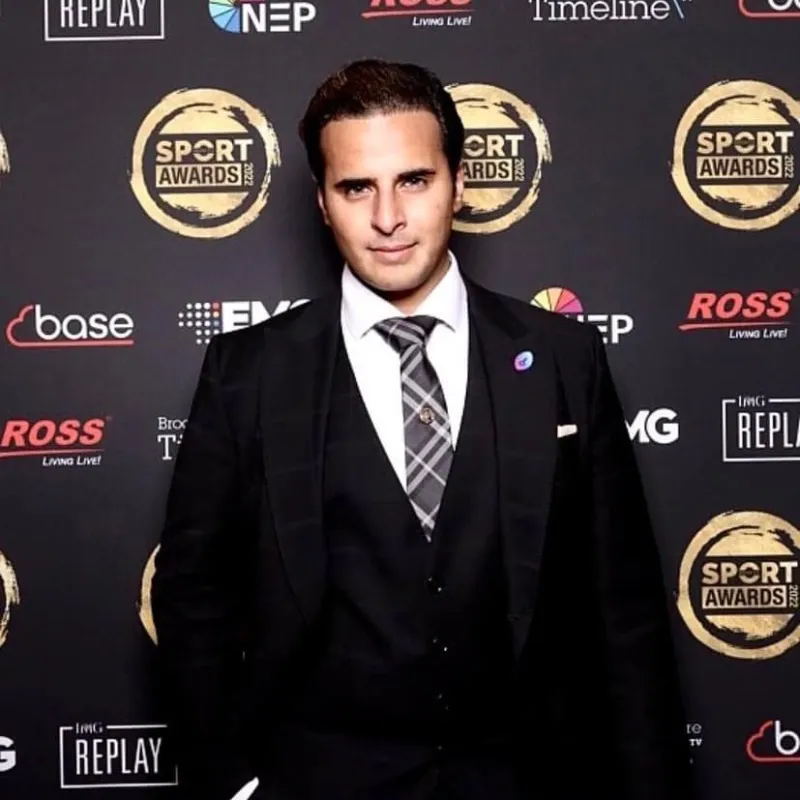
Photo: Decyfr Now, CC BY-SA 4.0, via Wikimedia Commons
Turn on any major sporting event on a Sunday afternoon and it looks effortless — two or three sharp voices breaking down the action, cracking jokes, and occasionally dropping a hot take that gets clipped and shared a thousand times by Monday morning. But what you're watching is the finished product of a process that's way messier, more political, and more constrained than most fans ever realize.
Sports commentary in America has changed dramatically over the past decade. And not always in the ways you'd expect.
The Corporate Safety Net Is Real
Here's something industry veterans will tell you off the record: there's a significant difference between what a broadcaster thinks and what actually makes it to air. Network deals with leagues — the NFL, NBA, MLB, you name it — are worth billions of dollars. That kind of money doesn't just buy broadcast rights. It buys a certain level of... cooperation.
That doesn't mean networks are scripting what commentators say word for word. It's subtler than that. It's the producer in your earpiece suggesting you "move on" when you start poking too hard at a referee's questionable call. It's the pre-broadcast meeting where certain storylines are flagged as sensitive. It's the gentle but firm reminder after a segment that a particular sponsor wouldn't love the direction a conversation went.
Veterans of the booth will tell you this isn't necessarily malicious — it's just business. But it creates a culture where self-censorship becomes second nature. You learn the invisible fences fast, or you don't last long.
The Authenticity Trap
Here's the irony that nobody really talks about: networks want personality. They want commentators who feel real, who have opinions, who make fans feel something. That's why ESPN built an entire identity around debate-style programming. That's why the "take economy" exploded on sports radio and podcasting throughout the 2010s.
But they want managed authenticity. Authenticity with guardrails.
The result is a strange middle ground where broadcasters are encouraged to be bold — right up until they're not. Say something that generates buzz and you're a star. Say something that generates a sponsor complaint or a league phone call, and suddenly you're in a meeting about "brand alignment."
This tension has pushed a lot of talented voices toward independent media. Podcasting, YouTube, and platforms like Substack have given former athletes and journalists a place to actually say what they think. And audiences have responded. Some of the most listened-to sports commentary in the country right now exists completely outside the traditional network structure.
Race, Politics, and the "Stick to Sports" Myth
No conversation about sports commentary in 2024 is complete without addressing the elephant in the room. The past decade has made it impossible to fully separate sports from broader cultural conversations — and broadcasters have been caught in the middle of that shift in very uncomfortable ways.
The old "stick to sports" directive — once a reliable fallback for networks trying to avoid controversy — has become increasingly untenable. When players are kneeling during the national anthem, when athletes are speaking out on social justice issues, when the sports world itself is generating political headlines, pretending none of that exists starts to feel dishonest.
Some networks have leaned into the complexity. Others have doubled down on the escape-from-reality angle, explicitly positioning sports coverage as a break from the noise. Neither approach is wrong, exactly. But both carry consequences for how commentators are expected to navigate their own voices.
Black commentators in particular have described walking a uniquely difficult line — being hired partly for their cultural credibility and authenticity, then being subtly or not-so-subtly discouraged from bringing that full perspective to the air.
When the Mic Catches What Wasn't Meant to Air
Some of the most revealing moments in sports media history have been accidents. Hot mic situations, off-script tangents, moments where a broadcaster forgot — or stopped caring — that millions of people were listening.
Those moments matter because they show you what's actually underneath the polished surface. Sometimes what comes out is ugly. Sometimes it's refreshingly honest. Sometimes it's both.
What they consistently reveal is that the gap between the public persona and the private opinion is often wider than fans want to believe. The commentator who sounds absolutely convinced by the official narrative on air? He might be rolling his eyes in the production truck five minutes later.
Where Commentary Is Actually Headed
The honest answer is that traditional sports broadcasting is being disrupted from multiple directions at once. Streaming has fragmented the audience. Social media has accelerated the news cycle to a point where a game broadcast feels almost secondary to the real-time commentary happening on X (formerly Twitter) and Reddit simultaneously.
And younger sports fans, in particular, have shown they have very little patience for the sanitized, play-it-safe style that defined network coverage for decades. They want opinions. They want conflict. They want the kind of unfiltered conversation that used to only happen on the barstool after the game.
The broadcasters who are thriving right now — whether they're on traditional networks or building their own audiences from scratch — tend to be the ones who've figured out how to be genuinely themselves within whatever constraints they're working under. Or, increasingly, the ones who've walked away from those constraints entirely.
The playbook is being rewritten in real time. And the most interesting thing about it is that nobody fully controls the pen anymore.