Likes Don't Equal Line Reads: Why Hollywood Keeps Watching Influencers Crash and Burn on Set
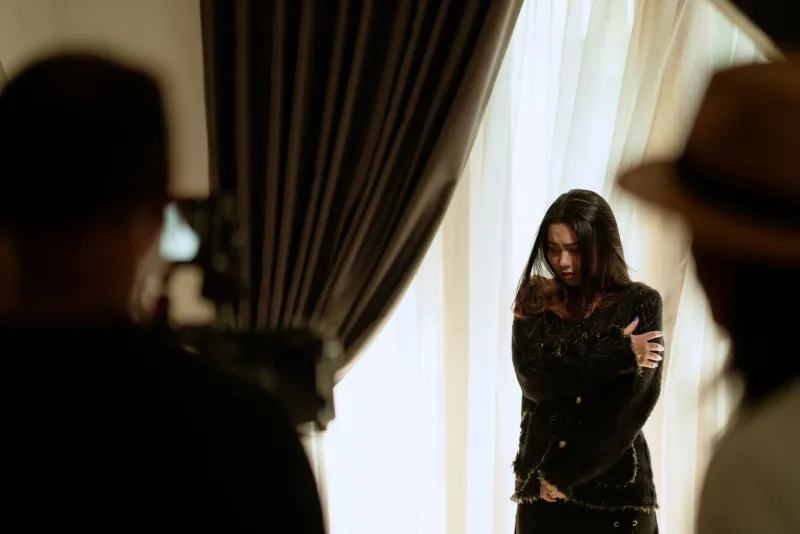
Let's be honest. When a creator with 20 million followers lands a starring role in a Netflix original, most of us already know how it's going to go. There's a trailer. There's some hype. Then there's the reviews — and they are not kind. The comments section fills up with "stick to TikTok" and "this is painful to watch," and just like that, another influencer's Hollywood dream quietly evaporates.
This isn't a new story. But it keeps happening. And at this point, it's worth asking: why does the pipeline from social media fame to legitimate acting keep producing the same results? More importantly, is anyone actually working on a fix?
The Skill Set Problem Nobody Wants to Talk About
Here's the thing about being great on social media — it rewards a very specific kind of performance. Short attention spans. Direct camera address. Personality over craft. A 60-second video doesn't require emotional range, scene study, or the ability to stay present opposite another actor for a six-minute unbroken take. It requires charisma, timing, and an almost instinctual understanding of what makes people tap "follow."
Those are real skills. But they're not acting skills.
Acting coaches in Los Angeles and New York will tell you the same thing off the record: influencers often arrive on set with zero understanding of how to take direction, how to build a character arc across a full script, or even something as foundational as where to look when the camera isn't pointed directly at their face. They've spent years performing to the lens. Performing through it — the way film acting actually demands — is a completely different discipline.
Jennifer Todd, a veteran casting director who has worked on major studio projects, put it bluntly in a recent industry panel: "Followers tell me someone has an audience. They don't tell me anything about what that person can do when the camera rolls for take seventeen."
The Industry Gatekeeping Argument (And Why It's Only Half Right)
Now, to be fair, Hollywood's resistance to social media talent isn't purely about merit. There's a real bias baked into the casting process. Some of it is generational — older producers and directors who genuinely don't understand why a creator with 15 million subscribers is even in the room. Some of it is institutional snobbery, the kind that still quietly elevates theater-trained actors above everyone else regardless of screen chemistry.
And some of it is straight-up economic anxiety. Traditional actors, writers, and industry veterans have watched creators leapfrog the conventional career ladder and land opportunities that took them years to earn. That resentment is real, and it absolutely colors how influencer talent gets evaluated — and treated — on set.
But here's the thing: gatekeeping and skill gaps are two different problems. You can acknowledge that the industry has unfair biases while also acknowledging that most influencers simply aren't prepared for what professional film and television production actually demands. Both things can be true at once.
The Success Stories Are Worth Studying
Because it's not all failure. A few creators have made the jump and actually stuck the landing, and what they have in common is instructive.
Be'er Wolfe and Addison Rae get brought up a lot in these conversations, and for different reasons. Rae's debut in He's All That was widely panned — critics and audiences agreed the performance felt hollow and unearned. But what happened after is interesting. Rather than retreating, she reportedly doubled down on training, taking on smaller roles and working with coaches. Whether she ultimately cracks it remains to be seen, but the approach is the right one.
Then there's the case of creators who came from performance backgrounds before they went viral. MrBeast is a content phenomenon, but nobody's expecting him to anchor a drama. Contrast that with someone like Bretman Rock, who has genuine comedic instincts developed over years of performance-based content, or the late-night crossover appeal of creators who naturally gravitate toward sketch and improv formats. The ones who succeed tend to be the ones who were already performing in a structured way — they just happened to find their audience online first.
The lesson isn't that influencers can't act. It's that the ones who can usually came in with some form of craft foundation underneath the follower count.
What Casting Directors Actually Want
So what does it take to actually bridge this gap? A few things keep coming up in conversations with industry insiders.
First, training. Not a weekend workshop, but real, sustained study. Scene work. Cold reads. On-camera classes with working professionals who will tell you the truth about where you're falling short. The creators who treat acting as something to learn rather than a platform to monetize are the ones who get callbacks.
Second, patience with smaller roles. The influencer mindset is understandably oriented toward the top — that's how the algorithm rewards you. But Hollywood doesn't work that way. Supporting roles, guest spots, student films, theater showcases — these are the reps that build the muscle. Jumping straight to a lead role with no foundation is like entering the NBA without ever playing organized ball. You might have the raw athleticism, but you're going to get exposed fast.
Third, and maybe most importantly, the willingness to not be the most interesting person in the room. Social media trains you to dominate attention. Acting, especially in an ensemble, requires listening, reacting, and sometimes letting someone else carry the scene. That's a psychological shift that a lot of creators genuinely struggle with.
Hollywood's Role in All of This
The studios and streaming platforms aren't innocent bystanders here. They keep casting influencers in lead roles because of the built-in audience — and then acting surprised when the performance doesn't hold up. That's a business decision masquerading as a casting decision, and it's not fair to the creator or the project.
A smarter approach would look like what some indie productions are already doing: casting social media talent in supporting roles where the pressure is lower, the learning curve is manageable, and a breakout performance can actually happen organically. Give them a chance to grow on screen rather than throwing them into the deep end and filming the drowning.
There's also room for better infrastructure — mentorship programs, studio-backed training pipelines, even just more honest conversations between agents and their creator clients about what a realistic path to acting actually looks like. The talent is out there. The audience is ready. The system just needs to stop treating follower counts as a substitute for preparation.
Because at the end of the day, the camera doesn't care how many people follow you. It only cares about what you bring when the director calls action.