The Invisible Hand in Your Feed: How AI Is Quietly Deciding Which Sports Stories You'll Ever See
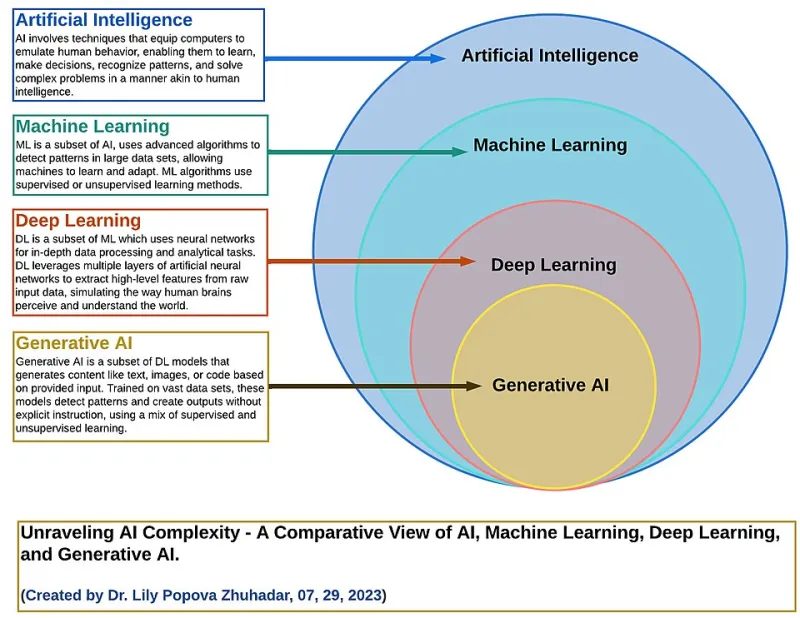
Photo: PopovaZhuhadar, CC BY-SA 4.0, via Wikimedia Commons
Here's a question worth sitting with for a second: When's the last time you actually searched for a sports highlight? Not scrolled past one, not had one autoplay — but genuinely typed something into a search bar and hunted it down?
For most of us, that answer is a long time ago. And that's exactly the point.
The platforms have gotten so good at predicting what we want that the act of discovery has quietly become something that happens to us rather than by us. Machine learning doesn't just suggest content anymore — it builds the entire landscape you're navigating. And in sports entertainment specifically, the consequences of that shift are enormous.
You're Not Browsing. You're Being Sorted.
Every time you pause on a clip, rewatch a dunk, or let a post-game interview play through to the end, you're feeding a model that's building a remarkably detailed portrait of your preferences. Not just "he likes basketball" — but granular stuff. Do you engage more with comeback narratives or dominant performances? Do you watch longer when the athlete is mic'd up? Does your scroll slow down when there's conflict involved?
Data scientists at major platforms aren't shy about how sophisticated this has gotten. The recommendation systems used by YouTube, TikTok, and even ESPN's own digital properties aren't working from simple demographic buckets anymore. They're running behavioral prediction models that can anticipate engagement before a piece of content is even fully distributed.
"The model doesn't care what you say you like," one viewership analyst who works with a major streaming platform told me. "It cares what you do. And what people do is almost always more interesting — and sometimes more uncomfortable — than what they'd admit to in a survey."
That gap between stated preferences and actual behavior is where algorithms thrive. And where authentic sports storytelling starts to get complicated.
The Viral Lottery Is Rigged — Just Not How You Think
When a sports moment blows up overnight, it's tempting to chalk it up to the content itself. Great play, wild reaction, unexpected outcome — the story earned its audience. But that's only part of the picture.
Platform promotion plays a massive role in determining which moments get rocket fuel and which ones fizzle out quietly. And increasingly, those promotion decisions are being made by automated systems responding to early engagement signals, not by human editors exercising editorial judgment.
This creates a feedback loop that's worth paying attention to. Content that triggers strong early reactions — shares, comments, replays — gets amplified. Content that tells slower, more nuanced stories gets deprioritized, no matter how compelling it might be to a patient viewer. The algorithm rewards the spike, not the simmer.
For sports media producers, this has real creative consequences. Short-form, emotionally immediate content is structurally advantaged over long-form storytelling. The 90-second highlight reel beats the 20-minute feature piece in the distribution race, almost every time. That's not a knock on highlights — they're great. But it shapes what gets made.
Athletes Are Hiring Algorithm Consultants Now
Here's something that would've sounded absurd five years ago: professional athletes are now working with social media strategists who specialize specifically in platform algorithm behavior. Not just "post more often" advice — actual technical guidance on optimal posting windows, caption structures, hashtag ecosystems, and content formats that the platforms are currently rewarding.
LeBron James' media operation, Bronny's early social rollout, Caitlin Clark's digital presence — none of that is accidental. The athletes building major personal brands in 2024 and beyond are treating algorithmic literacy as a core professional skill.
"You can have the most compelling story in the world," said one content creator who works with multiple NFL players on their digital brands. "But if you're posting it in the wrong format, at the wrong time, with the wrong thumbnail — the algorithm just won't show it to anyone. It's like throwing a party and forgetting to send invites."
This creates an interesting tension. The athletes who master algorithmic distribution gain outsized visibility, which attracts endorsements, media deals, and cultural relevance. The ones who don't — even if they're more talented or have more interesting stories — can get lost entirely.
What Gets Buried
The flip side of algorithmic amplification is algorithmic suppression — and that's the part nobody talks about enough.
Complicated stories don't perform well in recommendation systems. Nuance doesn't generate the same engagement spikes as outrage or triumph. This means certain types of sports narratives are structurally disadvantaged: stories about athletes dealing with mental health, long-arc recovery journeys, the day-to-day grind of minor league careers, stories from women's sports that haven't yet built algorithmic momentum.
Those stories exist. Journalists and documentarians are making them. But if the distribution layer is optimizing for immediate engagement over long-term resonance, a lot of genuinely important sports storytelling never finds its audience.
Some platforms are aware of this and are experimenting with ways to counter it — editorial curation layers, creator support programs, diversity-of-content initiatives. But the commercial incentives are powerful, and the algorithm, at its core, is still optimizing for time-on-platform.
The Question Nobody Wants to Answer
Here's where it gets philosophically messy: if an AI can predict what you'll engage with better than you can predict it yourself, is the content it surfaces actually good? Or is it just... effective?
Those are very different things. A piece of content can be highly effective at capturing attention while being completely shallow, sensationalized, or disconnected from what actually matters in sports. The algorithm doesn't distinguish. It measures behavior, not value.
For fans, the practical takeaway is worth sitting with. Your feed isn't a neutral reflection of what's happening in sports — it's a curated, personalized, commercially optimized version of it. The moments you never see are just as real as the ones you do.
For the industry, the challenge is figuring out how to build distribution systems that can reward both engagement and substance. Some people are working on that problem seriously. It's hard, and the business incentives don't always cooperate.
But the conversation is worth having. Because right now, the algorithm is writing the first draft of sports history — and most of us are just along for the ride.