From the Owner's Box to the Producer's Chair: How Sports Billionaires Are Buying Into Hollywood
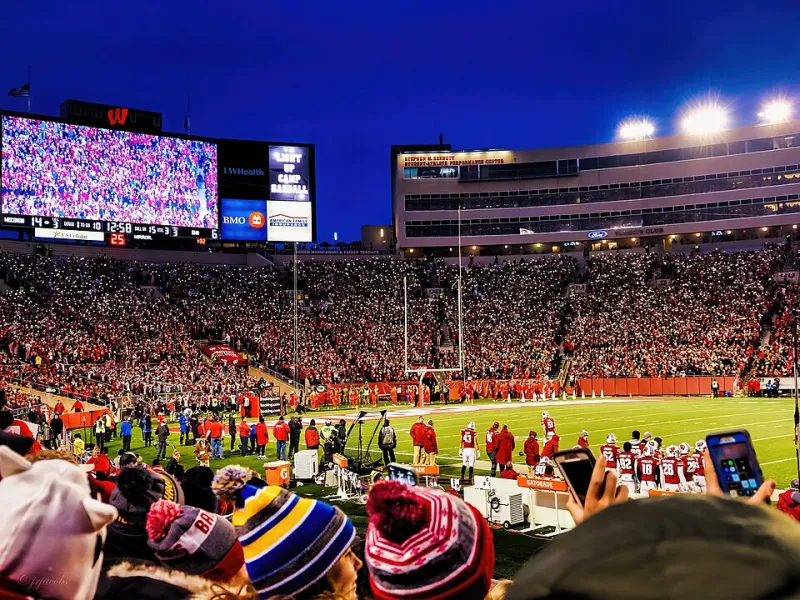
Photo: Bely Medved from Madison, USA, CC BY-SA 2.0, via Wikimedia Commons
Not that long ago, the worlds of professional sports ownership and Hollywood entertainment were mostly parallel tracks. Sure, they'd cross occasionally — a celebrity courtside at a Lakers game, a team owner showing up at a film premiere — but they operated as separate ecosystems with different power structures and different money.
That wall is coming down fast. And the people tearing it down are some of the wealthiest individuals on the planet.
The New Convergence
Over the past several years, a growing number of mega-rich sports franchise owners have been making aggressive moves into entertainment. We're talking about direct investments in streaming platforms, acquisitions of production companies, equity stakes in talent management firms, and in some cases, building entire media empires from scratch.
This isn't a coincidence or a hobby. It's a strategy — and a pretty sophisticated one.
The logic isn't hard to follow once you see it. Sports franchises are increasingly valued not just for what happens on the field, but for their media rights, their content libraries, and their ability to command attention in a fragmented streaming landscape. The jump from "we own a team with a massive TV deal" to "we should probably also own part of the platform distributing that content" is a short one.
Who's Making Moves
Let's look at some of the players involved, because the names here are genuinely eye-opening.
David Ellison, heir to the Oracle fortune and founder of Skydance Media, completed a landmark acquisition of Paramount Global in 2024 — one of the biggest entertainment deals in recent memory. Ellison isn't a traditional sports owner, but he's a perfect example of the ultra-wealthy tech and investment class that's now circling Hollywood the same way they once circled sports franchises.
Then there's the private equity angle. Firms like RedBird Capital Partners have been particularly aggressive, building a portfolio that spans sports teams across multiple leagues and continents while simultaneously investing in media and entertainment properties. RedBird has stakes in everything from AC Milan to a production company with ties to major content creation. The portfolio reads less like a sports investment fund and more like a vertically integrated entertainment conglomerate.
And you can't talk about this trend without mentioning the NBA, which has arguably led the way in producing owners who think like media executives. The league has long understood that basketball is as much a content product as it is a sport, and its ownership class reflects that.
Why Entertainment? Why Now?
The timing makes sense when you zoom out and look at the macro picture.
Traditional Hollywood studios have been under enormous financial pressure. The streaming wars burned through billions of dollars, consolidation has been brutal, and the old theatrical release model is still recovering from pandemic-era disruption. That creates acquisition opportunities for outside capital — and sports billionaires have plenty of outside capital.
At the same time, sports media rights have exploded in value, but the platforms bidding on those rights are increasingly the same streaming services that sports owners are now investing in. There's a circular logic here that's almost elegant: own the team, own the rights, own part of the platform, collect on all three sides.
Content is the connective tissue. Both sports and entertainment are fundamentally content businesses competing for the same finite resource — human attention. Once you see it that way, the convergence feels inevitable.
The Talent Agency Play
One of the more underreported angles in this story is the move into talent representation. Several major sports-adjacent investment groups have taken significant stakes in agencies that represent both athletes and entertainment talent. This matters because talent agencies sit at the intersection of both worlds — they broker deals, shape careers, and increasingly produce their own content.
When a sports billionaire has equity in an agency that reps both a starting quarterback and an A-list actor, the potential for cross-pollination — and leverage — is significant. It's the kind of behind-the-scenes power consolidation that doesn't make many headlines but reshapes the industry in real ways.
What This Means for Fans and Viewers
Okay, so billionaires are buying things. What does any of this mean for regular people who just want to watch their team or catch a good film?
A few things worth paying attention to:
Content quality and access. As sports owners gain influence over streaming platforms, expect to see tighter integration between live sports rights and subscription entertainment packages. We're already seeing early versions of this. Your sports subscription and your entertainment subscription may eventually be the same thing — controlled by overlapping ownership groups.
The blurring of sport and entertainment. When the same ownership class controls both, the incentive to treat sports as pure athletic competition diminishes slightly. The spectacle, the storylines, the drama — these become even more central because they drive engagement across both verticals. That's not necessarily bad, but it's a shift worth noticing.
Fewer independent voices. Consolidation in any industry tends to narrow the range of perspectives. When a smaller group of ultra-wealthy individuals controls more of the media and entertainment landscape, questions about editorial independence and creative freedom become more pressing.
The Bigger Picture
What's happening here is really a power transfer — from traditional Hollywood studios and legacy sports ownership to a new class of billionaire operators who see both industries as components of a single, massive attention economy.
For someone like me who has spent years covering the intersection of sports and entertainment, this is genuinely one of the most significant structural shifts I've seen. The owner's box and the producer's chair are merging into one seat, and the person sitting in it has more influence over American culture than almost any title would suggest.
Whether that's exciting or a little unsettling probably depends on who you are and how much you trust the people holding the checkbook. Either way, it's happening — and it's worth paying attention to.