One Guest Spot at a Time: How Former Athletes Are Quietly Building Podcast Empires

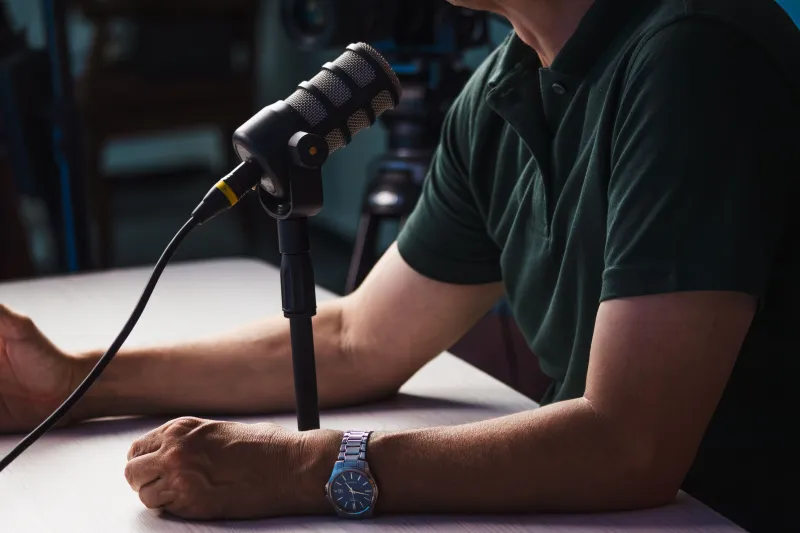
Photo by Photo by Austin Distel on Unsplash on Unsplash
There's a moment most retired athletes know all too well — the one where the locker room goes quiet for the last time, the cameras pack up, and suddenly nobody's asking for your take on anything. For decades, the only lifeline was landing a desk job at ESPN or Fox Sports, reading someone else's copy under studio lights. But something shifted. And that shift happened in a pair of earbuds.
Podcasting didn't just give former athletes a microphone. It gave them a blueprint. And the smartest ones figured out pretty quickly that a guest appearance on the right show wasn't just free publicity — it was a market test.
The Guest Spot as the Audition
Think about how this plays out in real life. A recently retired NFL linebacker gets invited onto a popular sports culture podcast. He's loose, funny, unexpectedly insightful about locker room dynamics. The clip goes viral on Twitter. His mentions explode. The host's audience starts asking, "Why doesn't this guy have his own show?"
That question is worth millions if you know how to answer it fast enough.
Former NBA center Enes Kanter Freedom did exactly this kind of circuit-riding before establishing his own media presence. Shannon Sharpe built his post-playing credibility through years of television before eventually co-launching "Nightcap," a podcast that immediately drew massive numbers because his audience already trusted him. Ryan Clark, after years on ESPN's The Pivot, helped relaunch that same show as an independent podcast that now commands serious sponsorship dollars without a network middleman in sight.
The pattern is consistent: appear, connect, build trust, then own the platform.
Why Podcasting Works Where TV Failed Them
Traditional sports broadcasting has always had a ceiling for athletes-turned-analysts. The format is rigid. You get three minutes to make a point between commercial breaks, a producer in your ear telling you to wrap it up, and a contract that owns your likeness and your opinions. You're talent, not a creator. There's a massive difference.
Podcasting flips that entirely. When an athlete hosts their own show, they control the run time, the guests, the topics, and — crucially — the monetization. Sponsorship deals, Patreon memberships, live show ticket sales, merchandise drops — all of it flows directly to the creator rather than getting filtered through a network's revenue structure.
And audiences can feel that freedom. There's a reason episodes where athletes go long, unfiltered, and genuinely personal consistently outperform the polished, network-approved content. Listeners aren't tuning in for hot takes. They're tuning in for access — the kind of real conversation that a three-minute ESPN segment will never deliver.
The Production Company Play
Here's where it gets really interesting. The athletes who've gone beyond just hosting their own shows are now launching full production companies, and podcasting is the foundation they built everything on.
LeBron James's SpringHill Company is the obvious heavyweight example, but the model is scaling down to players with far smaller profiles. Former MLB pitcher C.J. Wilson leveraged his media presence into business ventures. Marshawn Lynch's production work grew from his personal brand, which was cultivated through unscripted, authentic media moments. The through-line is always the same: the podcast or interview circuit established the voice, and the production company monetized it at scale.
When you own the production side, you're not just a host — you're selling shows to streaming platforms, licensing content, developing documentaries, and signing other athletes to your network. The guest spot that started it all becomes the origin story in a pitch deck.
What Makes the Podcast Circuit So Effective as a Strategy
Let's break down why this works as an actual business move rather than just a happy accident.
Audience borrowing is real. When an athlete appears on a show with two million subscribers, they're not just getting exposure — they're borrowing credibility. The host's audience trusts the host's judgment, and by extension, they extend a degree of that trust to the guest. Do this across ten or fifteen shows over six months, and you've built a recognizable name in a space where you previously had zero presence.
The medium rewards authenticity. Athletes who spent careers being media-trained into saying nothing are suddenly discovering that the thing audiences actually want is the unguarded version. Podcasts create the conditions for that to happen naturally. Long conversations, no script, a host who's genuinely curious — it draws out the real personality, and that personality is the product.
The data is immediate and honest. Unlike a television deal where ratings trickle in slowly through third-party measurement, podcast analytics show creators exactly who's listening, for how long, and where they drop off. Athletes who've spent careers studying film and optimizing performance adapt to this feedback loop fast. They know how to improve based on data. Podcasting gives them data.
The Longevity Factor
This might be the most underrated part of the whole equation. A sports commentary television role has a shelf life. The network moves on, the contract ends, the format changes. But a podcast audience, built slowly and loyally, is remarkably sticky.
The athletes who started in this space five or six years ago and stayed consistent — releasing episodes regularly, engaging with listeners, evolving their content — have audiences that feel genuine ownership over the show. That's not a viewer relationship. That's a community. And communities spend money, show up to live events, and evangelize to their friends in ways that passive television audiences simply don't.
For a retired athlete, that kind of sustained relevance is everything. It's the difference between being someone people used to talk about and someone people are actively following into whatever comes next.
The Playbook Is Already Written
The honest truth is that this isn't a secret anymore. Agents are advising clients to start booking podcast appearances before they even announce retirement. Media consultants are being brought in to map out a twelve-month guest circuit strategy before the first episode of an athlete's own show ever drops.
What started as a few savvy early movers figuring out the medium on the fly has become a legitimate post-career strategy with a documented track record of success.
The athletes who ignored it — who went straight to the traditional broadcasting route or disappeared from public life entirely — are watching their peers build audiences, revenue streams, and production companies from what looked like a casual conversation between two people with microphones.
Turns out, that conversation was the whole game.